
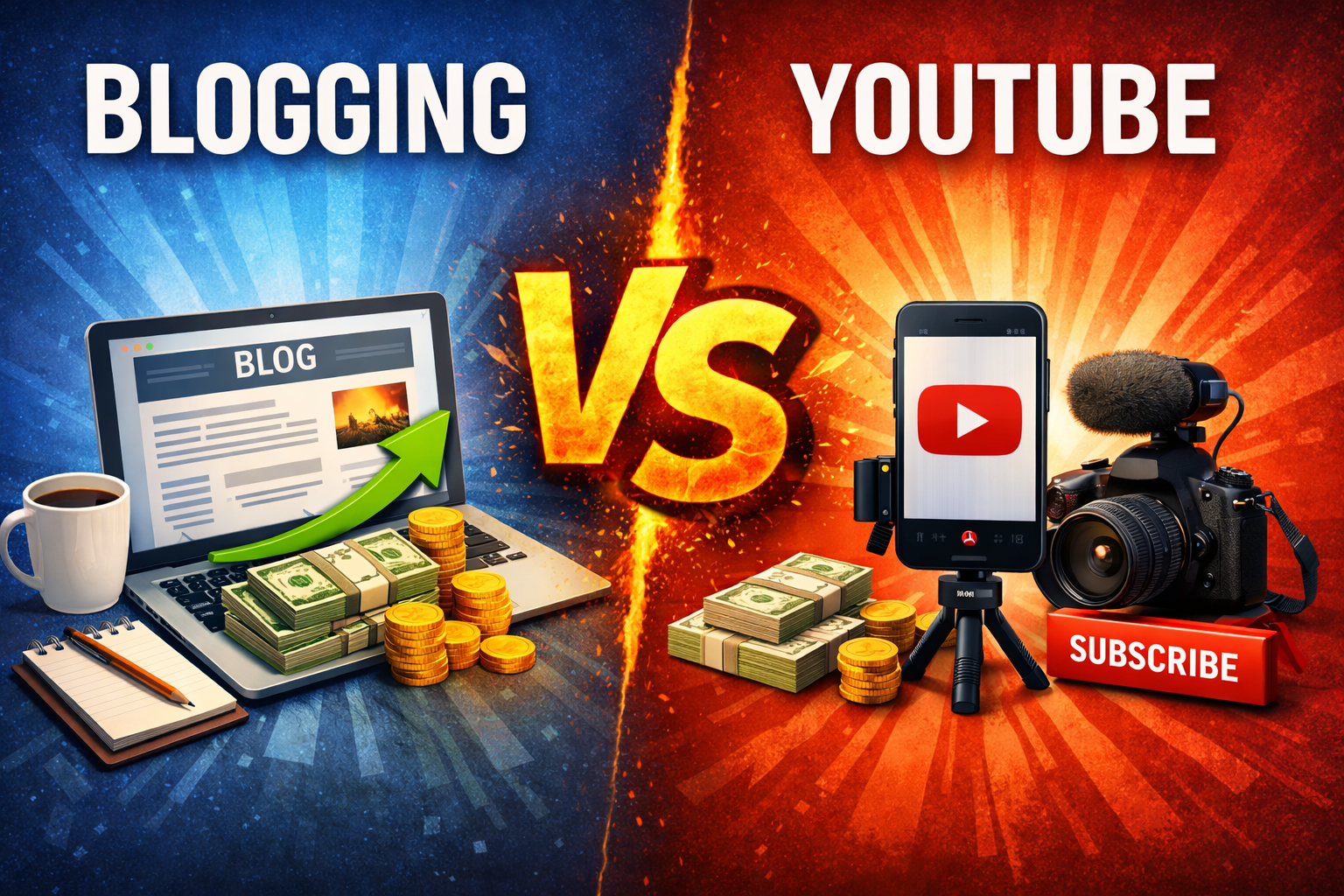
Blogging vs YouTube earning: In today’s digital world, earning money online is no longer a dream. Many people want freedom from a fixed schedule and look for platforms that can generate income over time. When this journey begins, one common confusion always appears: should you start a blog or a YouTube channel? Both promise earnings, fame, and growth, but the reality behind their income models is often misunderstood. The truth is not about which platform is better, but which one fits you, your skills, and your long-term goals.
What Is Blogging?
Blogging is one of the oldest and most reliable ways to earn online. In simple terms, blogging means creating written content on a website around specific topics such as news, technology, finance, health, lifestyle, entertainment, or education. Bloggers usually use platforms like WordPress to publish articles that answer questions, share information, or provide value to readers.
Most blog traffic comes from Google search. When people search for information, well-written and SEO-optimized articles appear in search results. Over time, a blog becomes a digital asset that keeps attracting visitors even when the blogger is not actively working on it. This long-term traffic is what makes blogging powerful for passive income.
What Is YouTube?
YouTube is a video-based platform where creators upload content such as vlogs, tutorials, reviews, educational videos, and news updates. Unlike blogs, YouTube focuses heavily on personality, visuals, and storytelling. Viewers subscribe to channels they connect with and spend time watching videos, which increases watch time and channel growth.
On YouTube, views directly impact earnings. The more people watch and engage with your content, the higher your chances of earning. Growth on YouTube can be faster compared to blogging because videos are pushed by the algorithm even to new creators if the content performs well.
How Blogging Earns Money
Blogging offers multiple income streams, which makes it a stable earning option when done correctly. One of the most common ways bloggers earn is through Google AdSense. AdSense shows ads on blog pages, and bloggers earn money when visitors view or click those ads. Blog AdSense earnings depend on CPC and CPM, which vary based on niche, country, and traffic quality. Finance, insurance, and technology blogs often have higher RPMs compared to entertainment or general topics.
Another strong income source is affiliate marketing. Bloggers promote products or services through special links within their articles. When a reader makes a purchase through that link, the blogger earns a commission. Sponsored posts also play a major role, where brands pay bloggers to publish paid articles, reviews, or mentions on their website. Many bloggers increase income further by selling digital products such as ebooks, online courses, tools, or consulting services, which often generate higher profits than ads alone.
How YouTube Earns Money
YouTube income mainly starts with AdSense revenue once a channel becomes eligible for monetization. YouTube AdSense depends on RPM, CPM, views, watch time, and audience location. Compared to blogs, YouTube AdSense RPM is often lower, meaning creators need a large number of views to earn significant income.
Brand sponsorships are a major earning source for YouTubers. Brands pay creators to promote products within videos, and these deals often pay more than AdSense alone. Affiliate marketing also works well on YouTube, where creators add product links in video descriptions. Apart from this, YouTube offers other monetization options such as channel memberships, Super Chat during live streams, merchandise sales, and product promotions, which together can surpass blog income for successful creators.
Blogging vs YouTube: AdSense Earnings Comparison
When comparing AdSense earnings, blogging usually has an advantage in high-paying niches. A finance or tech blog can earn more with fewer page views because advertisers pay higher CPCs. On the other hand, YouTube requires massive views to reach the same income level through ads alone. However, YouTube balances this gap through sponsorships and brand collaborations, which can significantly boost overall earnings.
Sponsorship Income: Blogging vs YouTube
Sponsorship income depends heavily on trust and audience engagement. Bloggers are usually paid per article, and brands value blogs for backlinks and long-term visibility. YouTubers are often paid per video, and brands prefer them for personal connection and product demonstration. While blog sponsorships offer long-term SEO value, YouTube sponsorships provide instant visibility and emotional impact, making both powerful in different ways.
Traffic & Growth Reality
Blogging growth depends on SEO and Google updates. It takes time to rank articles and build authority, but once traffic comes, it stays for years. YouTube growth depends on algorithm performance, thumbnails, titles, and audience retention. Beginners may see faster initial results on YouTube, while blogging rewards patience and consistency over time.
Investment, Skills & Effort Required
Starting a blog requires investment in domain, hosting, and basic SEO knowledge, but the ongoing cost remains low. Writing skills and keyword research play a major role. YouTube requires equipment such as a camera, microphone, lighting, and editing software. It also demands confidence, on-camera presence, and video editing skills, making it more effort-intensive initially.
Long-Term Income & Passive Earning Potential
Blogging shines when it comes to long-term passive income. A single article can earn for years if it ranks well. YouTube videos may slow down over time unless creators consistently upload new content. However, viral videos can generate sudden spikes in income, something blogging rarely does.
Blogging vs YouTube: Which Is Better for Beginners?
Blogging is ideal for those who enjoy writing, research, and working behind the scenes. YouTube suits people who are comfortable speaking on camera and love visual storytelling. Success on both platforms depends on niche selection, consistency, and smart monetization strategies. Many successful creators today combine blogging and YouTube to maximize reach and income.
Disclaimer: The earnings discussed in this article are based on industry trends, publicly available data, and general experience. Actual income may vary depending on niche, effort, skills, market conditions, and monetization strategy. This content is for informational purposes only and does not guarantee financial results.
Read more
Anukul Roy Net Worth in Rupees: How Much Does the Young Indian Cricketer Earn in 2025?
Noise NoiseFit Pro 6R Launched: Premium Design, Smart Features & Price Revealed